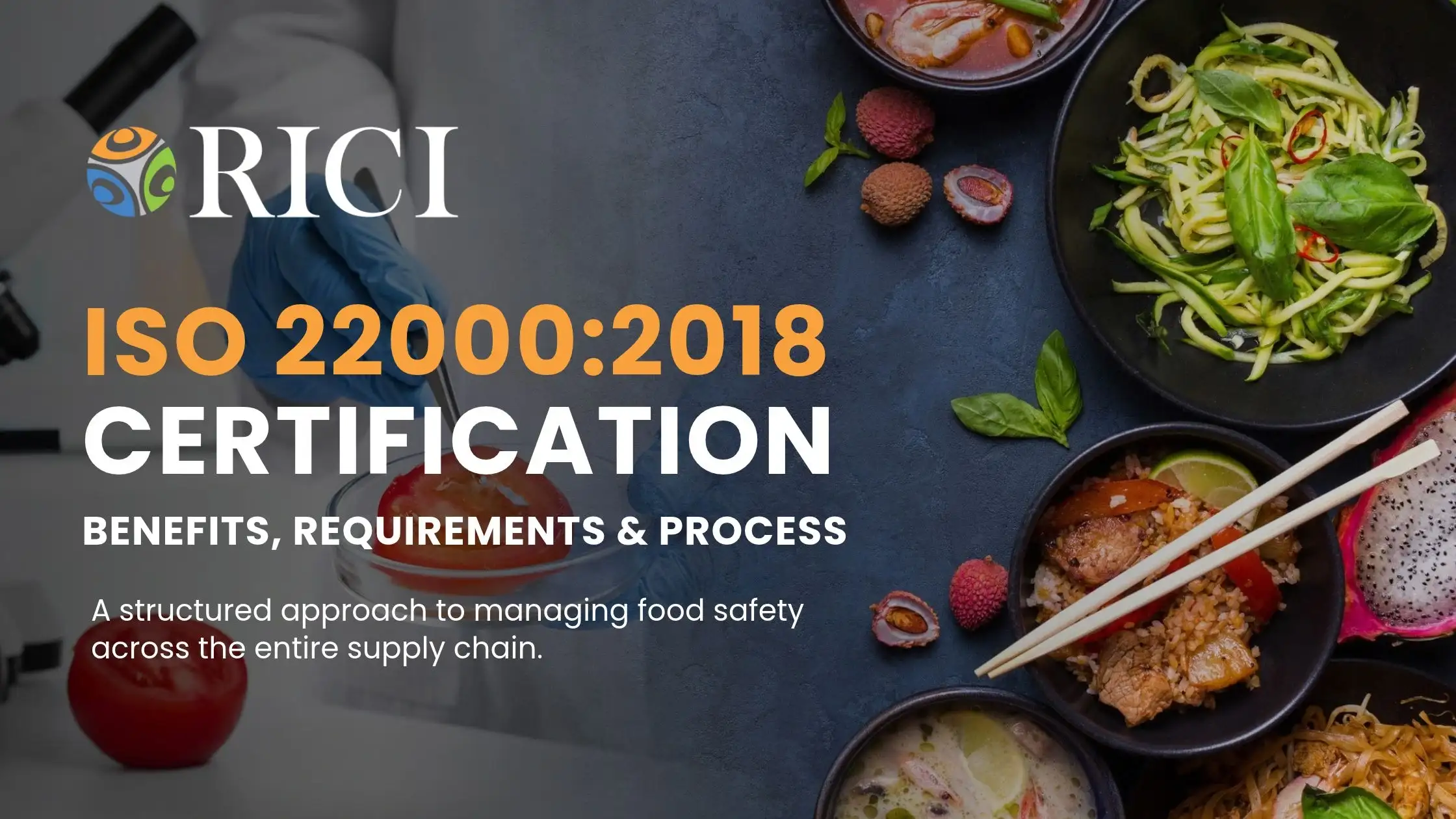
ISO 22000 Certification: From Food Safety Risks to Better Business Control
1-Nov-2026
ISO 22000 Certification: From Food Safety Risks to Better Business Control
Is Food Safety Properly Managed at Every Stage of Your Business?
Food safety involves much more than maintaining clean kitchens or inspecting finished products. Risks can enter at any stage, from receiving raw materials and processing ingredients to packaging, storage and transportation.
Without effective controls, a small operational weakness can affect product quality, customer confidence and business performance. Organizations need a structured approach to identifying hazards, managing risks and maintaining consistent food safety practices.
ISO 22000:2018 provides an internationally recognized framework for establishing a Food Safety Management System (FSMS). It helps organizations throughout the food chain control food safety hazards and demonstrate their commitment to handling and producing safe food.
If your organization wants to strengthen its food safety practices, discuss your ISO 22000 requirements with RICI.
What Is ISO 22000:2018 Certification?
ISO 22000:2018 specifies requirements for a Food Safety Management System. It combines management system principles with food safety controls, including the principles of Hazard Analysis and Critical Control Points (HACCP).
The standard helps organizations identify potential hazards, establish appropriate control measures, monitor their effectiveness and continually improve their processes.
An effective food safety management system also establishes responsibilities, communication channels and documented procedures, helping employees understand their role in protecting consumers.
Which Businesses Can Benefit from ISO 22000 Certification?
ISO 22000 applies to organizations involved in the food chain, regardless of their size or complexity. These include:
-
Food and beverage manufacturers.
-
Food processing and packaging companies.
-
Restaurants, catering and food service providers.
-
Food ingredient and raw material suppliers.
-
Warehousing and cold storage facilities.
-
Food transportation and distribution companies.
-
Agricultural and other food-related businesses.
The standard helps organizations establish consistent controls and improve coordination with suppliers and customers.
What Are the Main ISO 22000 Requirements?
Implementing ISO 22000 involves more than preparing documents. Organizations must establish, operate and maintain processes that address food safety risks.
1. Leadership and Management Commitment
Top management must establish a food safety policy, assign responsibilities and provide the resources needed to operate the management system.
2. Hazard Identification and Control
Organizations must identify biological, chemical and physical hazards associated with their products and processes. They must evaluate these hazards and establish suitable control measures.
3. Prerequisite Programmes
Businesses need appropriate hygiene and operational conditions, including cleaning, sanitation, pest control, equipment maintenance and personal hygiene.
4. Operational Planning and Control
Food safety activities must be planned, implemented and monitored. Organizations should establish controls for relevant processes and prepare for potential emergencies.
5. Traceability and Communication
Businesses need suitable systems to trace products and communicate relevant food safety information to suppliers, customers and other stakeholders.
6. Performance Evaluation and Improvement
Internal audits, monitoring, management reviews and corrective actions help organizations evaluate whether their food safety management system remains effective.
Why Is ISO 22000 Certification Important?
A properly implemented management system can provide several practical benefits:
-
Better hazard control: Helps identify and manage food safety risks.
-
Consistent operations: Establishes procedures and responsibilities.
-
Customer confidence: Demonstrates commitment to food safety.
-
Improved supplier relationships: Supports communication throughout the supply chain.
-
Regulatory support: Helps organizations address applicable food safety requirements.
-
Continual improvement: Encourages regular performance evaluation and corrective action.
Certification does not guarantee that food safety incidents will never occur. It provides independent evidence that an organization's management system has been assessed against the applicable standard requirements.
How to Obtain ISO 22000 Certification
The certification journey generally involves these stages:
Understand the standard: Identify requirements relevant to your products and business activities.
Conduct a gap assessment: Compare existing practices with ISO 22000:2018 requirements.
Implement the management system: Establish procedures, hazard controls, responsibilities and records.
Conduct internal audits: Evaluate implementation and identify nonconformities.
Complete management review: Assess audit results, performance and improvement opportunities.
Undergo the certification audit: An independent certification body evaluates the system and determines whether it meets the applicable requirements.
The timeline depends on business size, operational complexity, existing controls and management system readiness.
To understand the available certification options, explore RICI's ISO certification services.
How RICI Supports ISO 22000 Certification
RICI provides ISO 22000:2018 Food Safety Management System certification services, assessing organizations against the applicable management system requirements.
On 6 October 2026, RICI had certified OSAM Food Product Factory Company to ISO 22000:2018 and HACCP.
Read the full announcement about OSAM Food Product Factory Company's certification.
Organizations interested in certification can speak with RICI's certification team to discuss their requirements and assessment process.
How to Choose Among ISO 22000 Certification Companies
Before selecting a certification provider, consider:
-
Whether it has appropriate accreditation and certification scope.
-
Its experience with food-sector organizations.
-
The competence of its auditors.
-
The clarity of its audit process and requirements.
-
Its communication throughout the assessment.
Do not base your decision on price alone. The credibility and suitability of the certification body matter when comparing ISO 22000 certification companies.
Request information about RICI's certification process to discuss your organization's needs.
Frequently Asked Questions
1. What is the difference between ISO 22000 and HACCP?
HACCP focuses on identifying and controlling food safety hazards. ISO 22000 incorporates HACCP principles into a broader management system that also addresses leadership, communication and continual improvement.
2. Is ISO 22000 suitable for small businesses?
Yes. The standard can be applied to organizations of different sizes. Implementation should reflect the nature and complexity of their activities.
3. How long does ISO 22000 certification take?
There is no fixed timeline. It depends on business size, existing controls, system readiness and the time required to address nonconformities.
4. Does ISO 22000 certification guarantee food safety?
No. It provides a framework for managing hazards and improving food safety performance, but organizations must maintain effective controls.
5. Does ISO 22000 certification need to be maintained?
Yes. Certified organizations must continue implementing their management systems and undergo applicable surveillance and recertification audits.
Make Food Safety Part of Everyday Operations
Effective food safety management requires consistent controls, trained employees, reliable records and regular performance reviews. ISO 22000 provides a framework to bring these elements together and help businesses manage food safety responsibilities.
RICI supports organizations seeking ISO 22000:2018 certification through its management system certification services. Start discussing your ISO 22000 certification requirements with RICI and take the next step towards stronger food safety management.
Related Blogs
Get Certified with International Standards
If your organization is looking to get certified for international standards relevant to your business, we can assess and assist you. ✅
Send Your Inquiry